Guide · 6 min read
The quiet guide to buying a lab-grown diamond
Carat is the easiest thing to measure and the least useful thing to compare. A short, practical guide to cut, colour, clarity — and what actually shows on the ear.
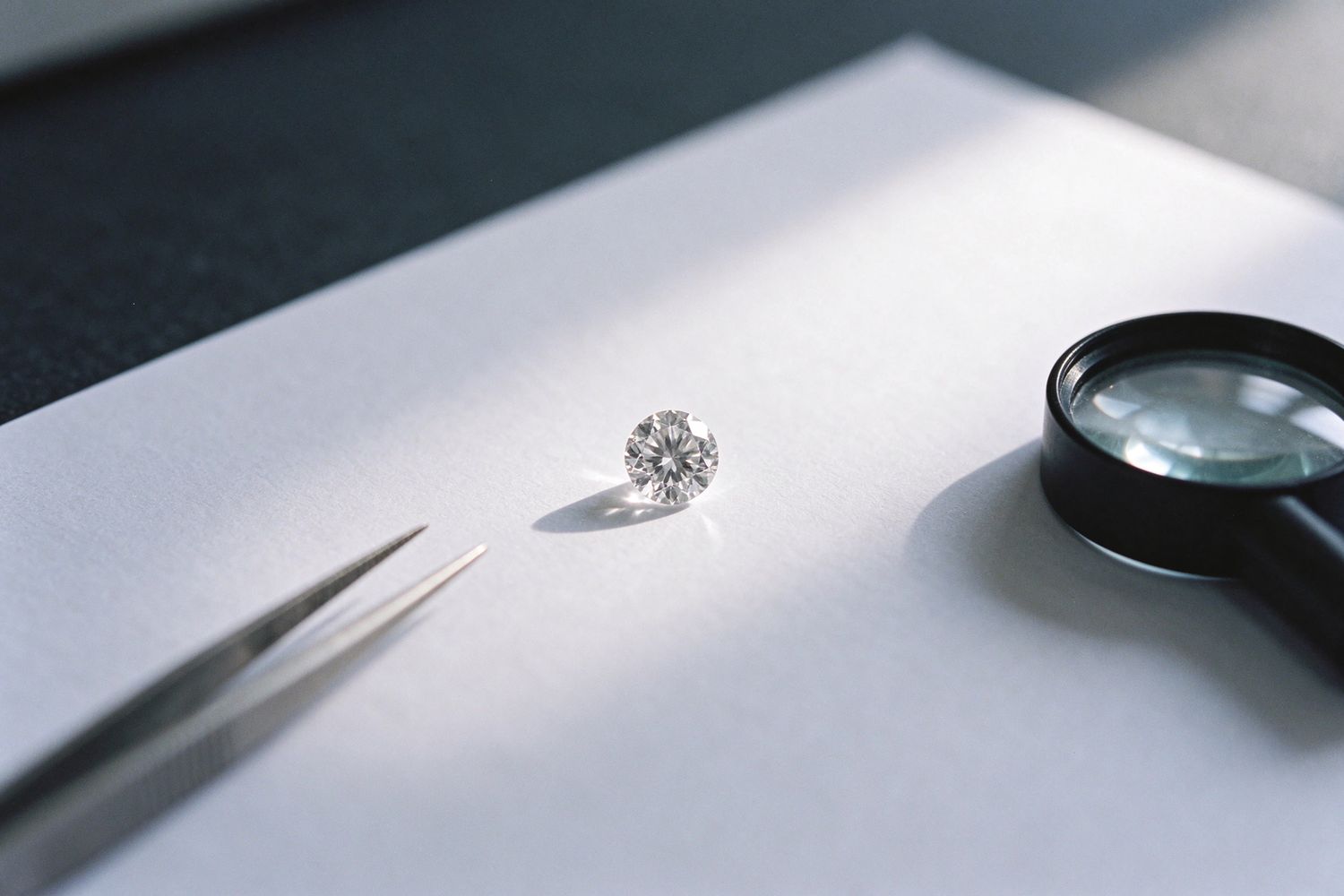
Buying a diamond is mostly an exercise in ignoring the loudest number in the room. Carat is simple to print on a label, which is why it dominates the conversation. But two stones of identical weight can look entirely different across a table, and only one of those differences is visible in a photograph.
Start with cut, not size
Cut is the only of the four Cs that is entirely in human hands. It governs how much light returns to the eye, and therefore how alive the stone looks. A well-cut 0.8 ct stone will out-sparkle a poorly cut 1.2 ct one every time — and it will cost less.
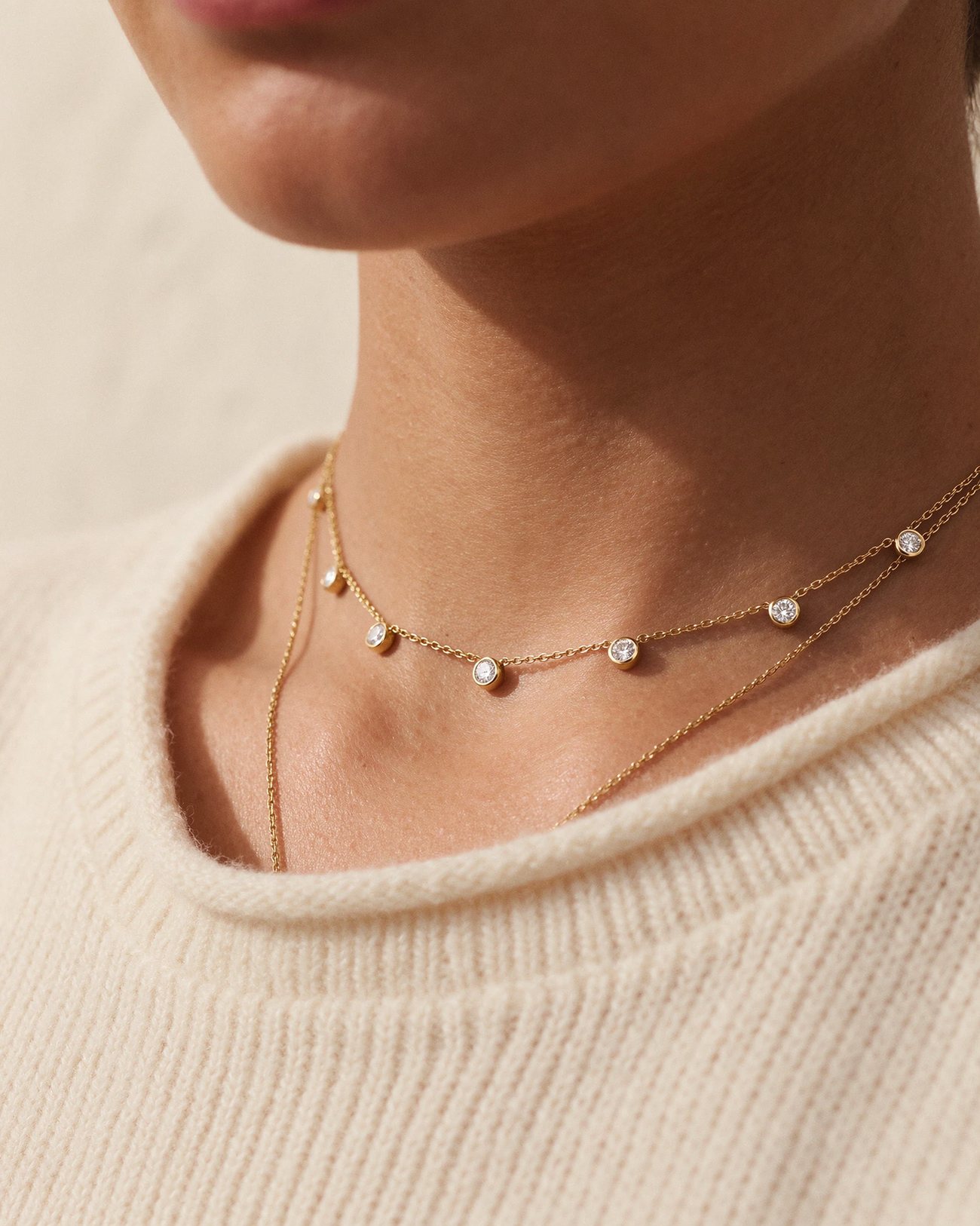
On an ear or a finger, what people notice is the flash, then the size. Almost nobody notices clarity grades above VS1 without a loupe. If your budget is finite, spend it on cut and let the other numbers be adequate.
Colour is a question of setting
A D-colour diamond is colourless; a G is near-colourless and, in yellow gold, indistinguishable to most eyes. The metal matters as much as the grade. White gold flatters D–F; yellow gold can carry G–J beautifully and save you a meaningful amount.
Set the stone in the metal you actually wear, then choose the colour grade in that context — not on a white card under a loupe.
Clarity: buy the eye-clean stone
VS1 and VS2 are clean to the naked eye in almost every case. SI1 can be eye-clean depending on where the inclusion sits. What matters is placement: a feather under the table is far more visible than one near the girdle, hidden by a prong.
Why we work in lab-grown
A lab-grown diamond is a diamond: same carbon lattice, same hardness, same optics. It is grown above ground rather than mined, graded by the same laboratories, and costs a fraction of a natural stone of the same specification. That is the whole reason our prices sit where they do.
The trade-off is resale. A lab-grown stone is a design choice, not a store of value — so we put the money into cut, setting and finish rather than rarity. For fashion-led pieces worn weekly, that is the better bargain.
What we check before a piece leaves the atelier
- Certificate number matches the stone and the report (IGI, or GIA where specified)
- Cut grade, polish and symmetry all rated Excellent or Very Good
- Stone is eye-clean at 30 cm in daylight
- Setting is level, prongs even, no rocking under a fingernail
- Fluorescence noted — faint is fine, strong can dull a stone
If you are choosing between two pieces and cannot decide, ask for a video in daylight and one in shade. The shade video tells you more about the stone than any certificate photograph.
Written by the ANRUO studio, Shenzhen.
Back to journal